The following is a complete overview of the Immune response in 6 simple steps.
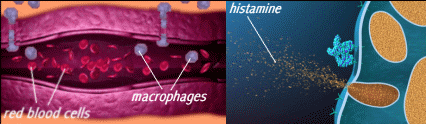
1. Once a threatening pathogen enters the body, the immune response begins with the release of histamine and vasodilation. Blood flow increases and macrophages are released towards the foreign predators.
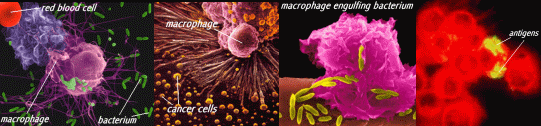
2. Once a macrophage encounters a pathogen, the macrophage engulfs it and then displays the pathogen's antigens on its surface. These antigens will attract other cells to arrive.
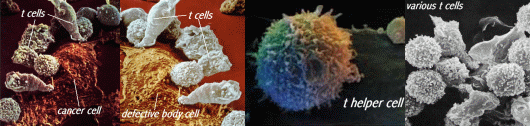
3. The display of antigens is recognized by T helper cells, which arrive, assist macrophages and summon other T cells [helper, cytotoxic (killer) and memory] and B cells to arrive on the scene.
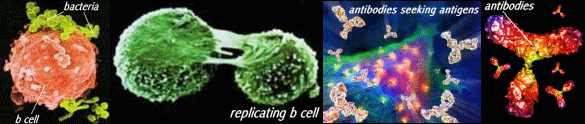
4. Stimulated by T cells, B cells arrive and rapidly multiply further assisting with the elimination of pathogens. They begin producing millions of antibodies, which bind to the antigens, thus weakening the pathogens.
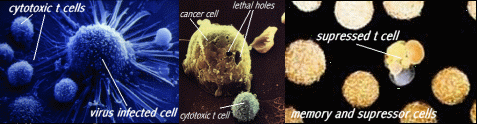
5. Cytotoxic "killer" T cells are activated and shoot holes into the antigen taggen pathogens. Memory cells linger around to quickly respond if the pathogen enters again while supressor cells stop the production of T and B cells.
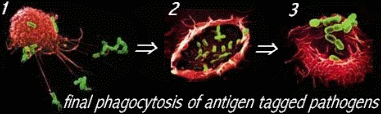
6. The process of all of the cells complementing each other has weakened the pathogen to where the macrophages and other phagocytic cells can now completely engulf the antigens, finally controlling the infection or bringing it to a halt.