** 2010 Update: The crappie population in Lake Union appears to have taken a dive in the last few years. While the fishing is no longer as good as it once was I will leave this information on the site for research and reference**
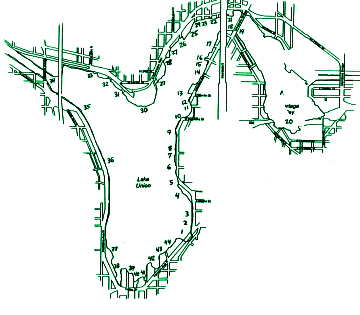
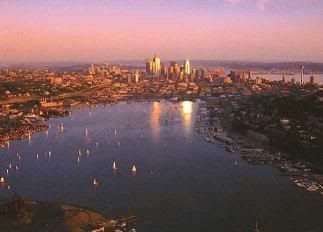
Lake Union is located in the heart of a metropolitan area yet offers some of the most consistent year-round crappie fishing to be found in Western Washington. You will find that the crappie in this lake live the text book crappie lifestyle. Traveling in large schools, feeding heavily on baitfish and plankton, maintaining close contact to deep-water structures, and following a very predictable pattern of seasonal movements. Anyone can come to this lake and find crappies on any given day. But it is those fisherman that really study this urban lake that will figure out how to not only catch crappies during every month of the year but also catch the true trophy fish that swim these waters. One only needs to look up the state record Black Crappie of 4.6lbs (caught from Lake Washington which is connected to Lake Union) to see that there are huge fish to be caught in these waters. You may fish a lifetime to catch a fish of that size from here but the chance of catching one is without a question there. Over the years I have studied this lake and have unlocked many of its secrets. I’m willing to reveal a handful of these secrets to get you started on your quest to catch crappies in the heart of downtown Seattle.First and foremost, the crappie on this body of water (like most) can be caught year-round if you can figure out their seasonal movements. I have caught crappie here in the middle of August in 90-degree heat as well as in January in the freezing cold of winter. One thing to always remember about crappie is that they will always (even during spawn) relate to areas that have deep water near by and Lake Union is no exception to this rule. Always focus your attention to structures that are either in deep water or very near it. There is really no reason to be casting jigs in the back of a bay that has huge expansive flats, as there will not be a large concentration of crappies to be found there. What you want to look for are areas such as flats, old pilings, rock points, hump, and rock reefs that are very near deep water. By deep, I mean water that is at least 10’-25’ deep on this body of water. This can also mean that certain times of the year the crappie will be found in water as deep as 35’. So in the spring if I were looking to find spawning crappie I would be throwing jigs around brush or docks that have at least 10’ of water beneath them. The crappies on Lake Union do not come into the “shallows” to spawn. I’ve seen fish here spawning on top of pilings that were located in 20’ of water! They relate to deep water at all times.
In the fall you’ll discover that the crappies in Lake Union will form into huge schools and will bite just about anything you can throw at them. These schools will move back and forth from deep-water structures to shallower water structures and at times can be very difficult to locate. The best thing to do at this time of year is to find one of the huge underwater humps and drift your boat back and forth over the hump until you locate a school of feeding crappie. Once you locate an active school drop out a marker buoy next to the school of fish. Now use your fish finder and circle the area in your boat to see if you can find a near by drop-off, reef, or rock flat that’s near shallow water. If you find one near by but there are no fish on the structure go back to the school that you marked with you buoy and fish for them. When they stop biting or you notice they have moved, go to the other near by structure that you’ve located and 7 out of 10 times the fish will have moved to that shallower structure. As it gets later into the evening/night the school will usually pick one or the other structure as a nighttime feeding ground and you can anchor up and fill the boat with slabs until the sun comes up.